


Carbon neutrality: definition
The concept of carbon neutrality does not mean eliminating all greenhouse gas emissions, but rather achieving a balance between greenhouse gas emissions and their absorption. In practical terms, this means that CO2 emissions must be reduced as far as possible and offset by carbon sequestration or storage measures. The EU has set itself the goal of achieving carbon neutrality by 2050. Manufacturers have a key role to play in meeting this challenge.
Indeed, industrial companies are responsible for a significant proportion of greenhouse gas emissions, particularly in the energy, manufacturing, transport and construction sectors. The transition to carbon neutrality therefore implies a profound transformation of economic models and industrial practices. To this end, France’s national low-carbon strategy (SNBC) is the country’s roadmap.
I. The challenges of carbon neutrality
The environmental challenges of carbon neutrality
The transition to carbon neutrality is essential if we are to limit the disastrous impacts of climate change (melting ice caps, rising oceans, an increase in extreme weather events, loss of biodiversity, etc.). According to the Intergovernmental Panel on Climate Change (IPCC), it is imperative to limit global warming to 1.5°C above pre-industrial levels to avoid even more dramatic consequences.
The economic challenges of carbon neutrality
Achieving carbon neutrality can also be a business opportunity: differentiate yourself from your competitors by adopting environmentally-friendly production methods.
Dametis can help you with this.
The social challenges of carbon neutrality
The transition to carbon neutrality must be fair and equitable for society as a whole, taking into account issues of social justice and sustainable development.
Challenges for industry
Reducing greenhouse gas emissions
The first challenge for industry is to reduce its carbon footprint, in particular CO2 emissions. To this end, we can support manufacturers in the implementation of several practices, such as :
- Implementing more efficient, less carbon-intensive production processes (using cleaner technologies and improving energy efficiency).
Note: according to the International Energy Agency (IEA), improving energy efficiency is the most cost-effective way to reduce CO2 emissions in industry.
- The use of renewable energy sources (solar, wind and hydro) to reduce dependence on fossil fuels.
- An energy audit to identify sources of CO2 emissions and define reduction targets.
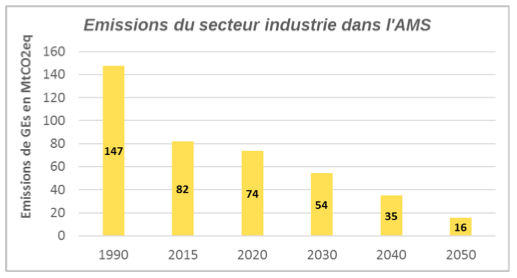
Reducing greenhouse gas emissions concerns not only large industrial companies, but also SMEs and businesses of all sizes and in all sectors. Every company can make its own contribution to the transition to a low-carbon economy by adopting more sustainable practices.
Improving energy efficiency
Improvingenergy efficiency is a key challenge for industries to achieve carbon neutrality by 2050. Reducing energy consumption in industry can drastically cut greenhouse gas emissions.
To improve their energy efficiency, companies can adopt various measures, for example:
- The implementation of energy monitoring and control systems to track energy consumption and identify sources of waste. These systems help manufacturers to identify optimization opportunities and take steps to reduce energy consumption.
- The implementation of more efficient production processes, for example by optimizing inventory or waste management.
- The use of more efficient technologies, such as more energy-efficient production equipment or LED lighting.
- Training and raising employee awareness of energy efficiency issues, which can lead them to adopt more energy-efficient behaviors.

A center of excellence, the Dametis Academy trains manufacturers in the best practices of environmental performance.
With the explosion in energy costs and growing ecological challenges, improving environmental performance is a key issue for industry players.
Improving energy efficiency can also bring economic benefits for companies. By reducing their energy consumption, manufacturers can save on their energy bills and cut production costs. What’s more, investment in more efficient technologies can improve a company’s long-term competitiveness.
III. How can we achieve carbon neutrality?
To achieve carbon neutrality by 2050, industries can adopt various solutions, including :
- The use of renewable energies: solar, wind and hydro power generate energy without greenhouse gas emissions. Companies can invest in renewable energy production equipment, or purchase green electricity from renewable energy suppliers.
- Installation of carbon capture and storage systems: this helps reduce greenhouse gas emissions from heavy industries such as the chemical, steel and cement industries. This solution involves capturing the CO2 emitted during production, then storing it in underground reservoirs or using it to generate energy.
- Promoting the circular economy: reducing waste and reusing resources wherever possible
- Supply chain optimization: companies can work with their suppliers to reduce the greenhouse gas emissions associated with the production of raw materials. This can take the form of increased use of sustainable raw materials, more environmentally-friendly farming practices, or a reduction in emissions linked to the transportation of raw materials.
- Implementing more sustainable working practices: reducing business travel, telecommuting, or using remote communication technologies. These practices help reduce greenhouse gas emissions linked to business travel.
The transition to carbon neutrality cannot be achieved overnight; it requires a strong and lasting commitment from all industries. The goal of carbon neutrality by 2050 is achievable by working together to build a more environmentally friendly and sustainable future.
Dametis helps you decarbonize industry !