

In a global context increasingly preoccupied with environmental issues, companies, particularly manufacturers, are faced with the imperative of reducing their carbon footprint. Indeed, greenhouse gas emissions from industrial activities are one of the main sources of climate change.
It is in this context that carbon offsetting appears to be a promising solution.
I. What is carbon offsetting?
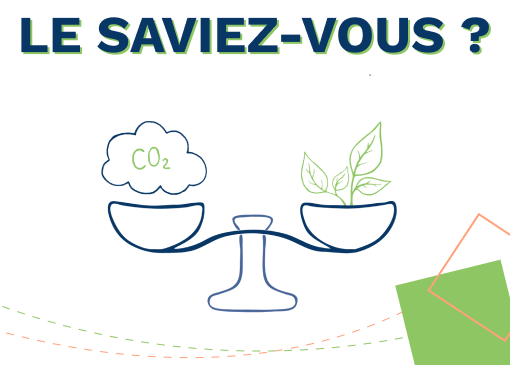
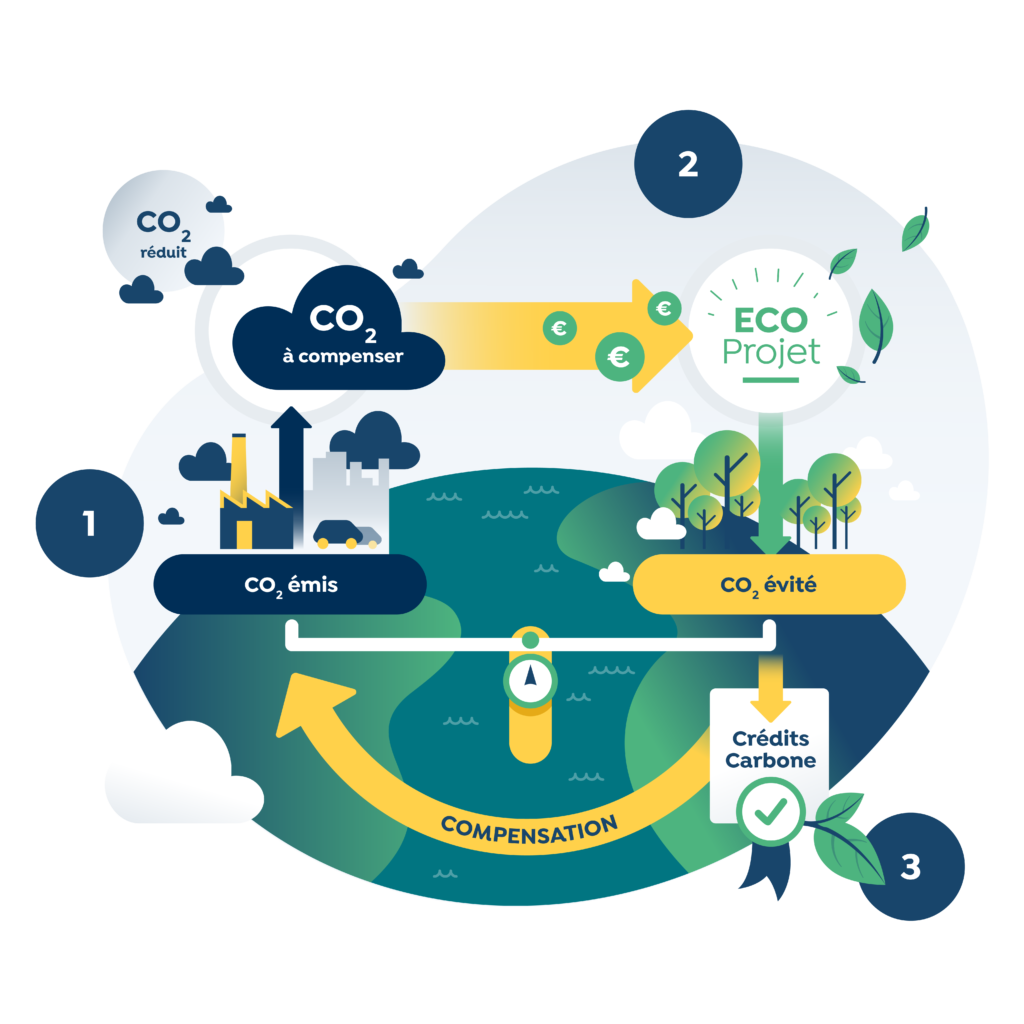
Carbon offsetting involves reducing or offsetting a company’s greenhouse gas emissions by financing projects or actions that capture or reduce equivalent quantities of CO2 or other greenhouse gases.
This approach aims to achieve a balance between the emissions produced by the company and the emissions reductions achieved elsewhere. It offers manufacturers a way of reducing their environmental impact while maintaining their economic activity.
Carbon offsetting is based on the principle that all greenhouse gas emissions contribute to climate change, regardless of where they are emitted. Therefore, by supporting projects that reduce or capture these emissions elsewhere, companies can offset the environmental damage caused by their own activities.
It is important that offset projects are carefully selected to ensure that they are credible, measurable and have a real impact on reducing greenhouse gas emissions.
II. The stakes of carbon offsetting for your company
Carbon offsetting presents a number of important challenges for your company. Here are just a few of them:
- Reduce greenhouse gas emissions and associated costs: By financing offset projects, you can reduce your carbon footprint and the costs associated with reducing greenhouse gas emissions. For example, if you have significant emissions from your transportation activities, you can offset your emissions by financing reforestation projects, rather than investing in cleaner vehicles or alternative fuels.
- Improving your image and attractiveness to customers and investors: Consumers and investors are increasingly aware of the environmental impact of companies, and are looking to associate themselves with companies that are taking steps to reduce their carbon footprint. By offsetting your greenhouse gas emissions, you can show that you take the issue seriously and are committed to the fight against climate change.
- Contributing to the fight against climate change and complying with environmental regulations: Finally, carbon offsetting can contribute to the fight against climate change by financing projects that reduce or capture greenhouse gas emissions. Increasingly, certain environmental regulations may require companies to offset part of their greenhouse gas emissions in order to comply with environmental standards. For example, the European Union has set up a carbon emissions trading scheme (ETS) to limit companies’ greenhouse gas emissions. Companies that emit more than their quota must buy carbon credits to offset their excess emissions.
Please note: Carbon offsetting must not be used to justify activities that have a negative environmental impact!
III. How to set up a carbon offset program?
Step 1
Assessing the company’s carbon footprint
The first step is to assess your carbon footprint, i.e. the quantity of greenhouse gases you emit in the course of your activities. This assessment will enable us to identify the most significant sources of emissions and define the actions needed to reduce them at source. There are several tools and methodologies for carrying out this assessment, notably the Bilan Carbone and the ISO 14064 standard.
Step 2
Selection of carbon offset projects
Once your carbon footprint has been assessed, it’s time to choose which carbon offset projects to finance. Projects must be credible, measurable and have a real impact on reducing greenhouse gas emissions. There is a wide variety of carbon offset projects, such as reforestation, wetland restoration, renewable energy, carbon capture and storage, etc. You can choose projects that have a real impact on the environment. You can choose projects that are directly linked to your business or that take place in the regions where you operate.
Step 3
Monitoring and communicating results
Once carbon offset projects have been selected, it’s important to monitor their implementation and results. You can ensure that projects are carried out in line with international quality standards, and that they meet your targets in terms of reducing greenhouse gas emissions. The results must be transparently communicated to your company’s stakeholders, such as customers, investors and employees, to reinforce your commitment to the fight against climate change.