


ISO 50001 certification: Dametis supports you
ISO 50001 is not only a certification but also a method for increasingenergy efficiency in factories. Dametis helps manufacturers obtain and maintain ISO 50001 certification.

What is ISO 50001?
Created in 2011 and revised in 2018, the ISO 50001 standard was developed by the International Organization for Standardization (ISO), with the aim ofimproving the energy performance of certified sites. Although this certification is not yet mandatory, it can represent a real strategic lever for manufacturers who choose to become certified.
In addition, regulations concerning industrial energy management are evolving rapidly. For example, the DDADUE law adopted in April 2025 introduces obligations for manufacturers whose annual energy consumption exceeds 2.7 GWh.
If the site’s consumption is between 2.7 GWh and 23.6 GWh, an energy audit is mandatory (before October 11, 2026) and must be repeated every four years.
For sites exceeding an annual consumption of 23.6 GWh, the law requires the implementation of an ISO 50001 energy management system by October 11, 2027 at the latest. However, there are exemptions and penalties.
As a result of the obligations imposed by the DDADUE law, some manufacturers who are required to set up an EMS already have a system that complies with the standard. It is therefore in their interest to obtain certification, so as to gain official recognition while benefiting from the advantages offered by ISO 50001 certification.
What are the benefits of ISO 50001 certification?
Being ISO 50001 certified means enjoying benefits both internally and externally.
Internally :
- Optimize your energy consumption: by identifying sources of drift and waste, you can act quickly to remedy them.
- Reduce your energy bills: rapid analysis of consumption reduces energy wastage, which in turn has an impact on your bill.
- You federate teams: more than a certification, ISO 50001 is a clear methodology for involving all teams around a common objective.
- Reduce your carbon footprint: ISO 50001 covers all your site’s energy sources, so optimizing gas, for example, can help you reduce your carbon footprint.
Externally, ISO 50001 certification enables you to clearly demonstrate your commitment to the environment. It also enhances your brand image, giving you a competitive edge.
Sanctions and exemptions
In the event of non-compliance with the obligations set out in the DDADUE law, manufacturers can be fined up to 2% of their sales (excluding VAT) (for repeat offenders, the fine can rise to 4%).
However, there are a number of exemptions to be aware of:
All industries with a certified environmental management system, including an energy audit in line with requirements, are exempt.
Also exempt are all manufacturers with an energy performance contract covering at least 80% of their final energy consumption.
Of the 3 exemptions, this one concerns only industries whose energy consumption is between 2.7 GWh/year and 23.6 GWh/year: they are exempt from the obligations as long as they implement an ISO 50001 energy management system.

How to obtain ISO 50001 certification

To become ISO 50001 certified, you need to apply to an accredited organization. An audit will then be scheduled, enabling the certifier to assess your energy data and company practices. At this stage, the organization may give you a number of recommendations, which you’d better follow, as a second visit generally takes place between 45 and 90 days after the first audit. Once these two visits have taken place, your file will be examined by the certification committee and audit report, after which you will know whether the auditor has granted you ISO 50001 certification.
When you obtain certification, you should be aware that it is valid for 3 years, after which a renewal audit must take place.
It’s important to note that obtaining ISO 50001 certification can take a long time (between 6 and 18 months), and the path to achieving it is complex. That’s why it’s a good idea to enlist the help of a service provider like Dametis.
I would like support in obtaining ISO 50001 certification
Dametis helps you achieve ISO 50001 certification
Preparing for certification and maintaining it over time can quickly become a complex subject in which teams get lost. This is why the implementation of an energy management system (EMS or EMSn) is essential. Implementing an EMS software package is an interesting way of facilitating both the process and the monitoring of the standard, since it will make it possible to :
- Centralize all the steps required by the standard.
- Takestock of your energy consumption, set targets and define an action plan.
- Make it easier to keep track of your energy review.
- Maintain your site’s performance over time, in particular by identifying drifts.
- Monitor and maintain the metering plan.
- Create reports and simplify your internal and external communications.
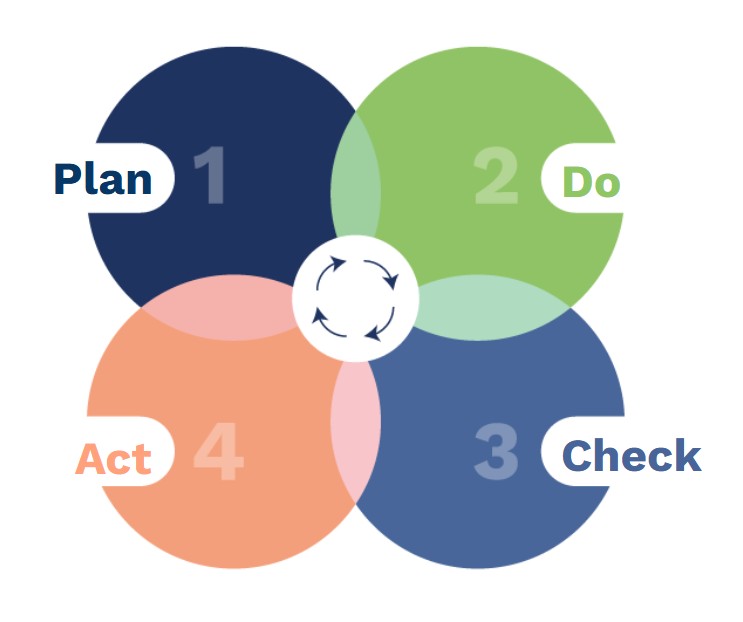
Plan: we draw up an action plan with objectives and KPIs to monitor in order to analyze your energy challenges as effectively as possible.
Do: we implement the actions recommended by the software, and train and raise awareness among your teams for internal and external communication.
Check: we analyze your performance through an audit, and use the software to measure the results obtained against those initially set.
Act: we implement corrective actions and standardize best practices with your teams.
Would you like to set up an EMS or benefit from support in obtaining or maintaining your ISO 50001 certification? Call on our services.
Dametis helps you achieve ISO 50001 certification
Error: Contact form not found.