

Fatal energy:
high recovery potential
Could this be the poor relation of the energy transition? At any rate, unavoidable energy is often the forgotten element of energy policies. And yet, the volumes involved are significant and, above all, can sometimes be valorized. Here’s an overview of this important concept.
What is fatal energy?
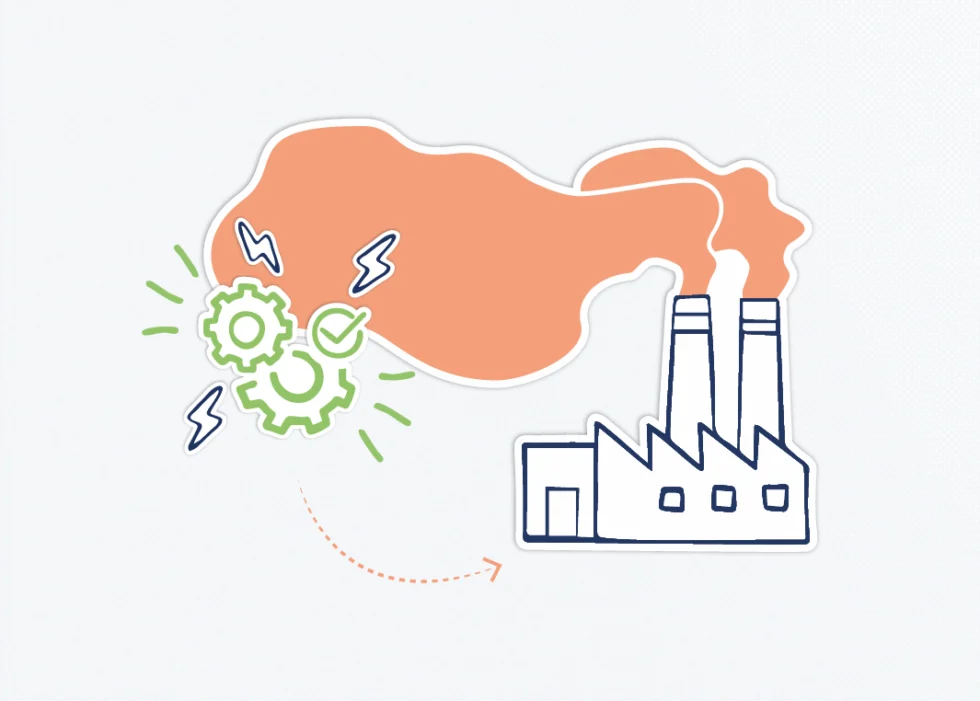
Unavoidable energy is energy produced unintentionally during an industrial process. It is also known as residual energy, or dissipated energy. This energy can take various forms: cold, gas, electricity… but in most cases, it is heat. More precisely, it’s known as waste heat.
We speak of recovered energy when a recovery process has been put in place. This is the ideal situation, since this energy is “free”. In some cases, it can even be said to be ”
What volumes are involved?
There are few studies precisely quantifying the volumes of fatal energy lost each year. The most significant dates from 2017 and was carried out by Ademe. It focuses on waste heat. It has not been updated since then.
The Agence de la Transition Ecologique estimated the various sources of unavoidable energy:
- Industry: 109.5 TWh from fuel combustion in industry is rejected in the form of heat (48% of which is lost at over 100°C). Two sectors(food processing and chemicals/plastics) together account for 53% of the total.
- Heating networks: 16.7 TWh.
- Household waste incineration plant: 4.4 TWh.
- Data centers: 3.6 TWh.
- Wastewater treatment plant: 0.4 TWh.
At that time, industry accounted for the vast majority (more than 80%) of the source. Since then, however, it’s highly likely that data centers, in particular, have seen a sharp increase in the amount of fatal energy available.
Faced with this situation, the public authorities have imposed an obligation to use waste heat from all data centers over 1 MW, which have until October 11, 2025 to comply.
36%
Estimated industrial fuel consumption lost to the atmosphere in France
Source : Ademe
How can I recover my waste energy?
There are two main ways of recovering waste energy:
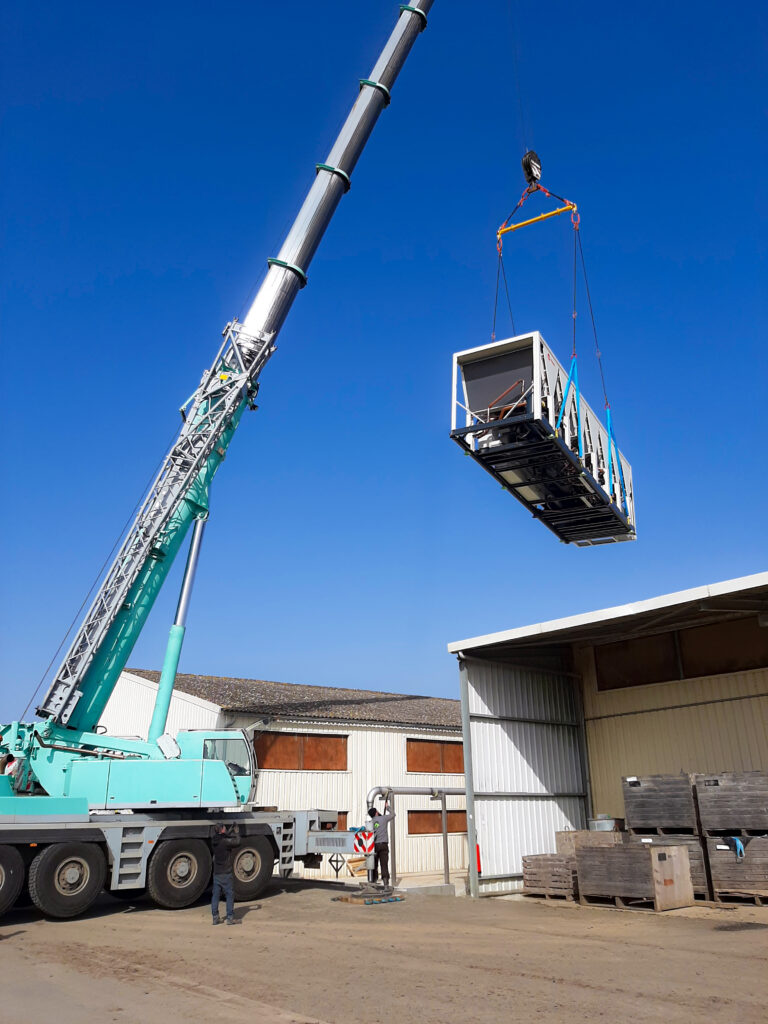
- In-house, on site, to supply needs using heat exchangers, heat pumps, steam turbines or ORC machines (organic Rankine cycle machines that can, for example, produce electricity from heat) for the highest temperatures.
- Externally, to supply heat to third parties. For example, waste heat recovered from data centers can be used to heat premises or other nearby consumers, or injected into a district heating network.
Can I get help?
There are two main support mechanisms for heat recovery.
First of all, a number of operations are eligible for energy-saving certificates.
Examples include operations linked to a heat recovery system on a refrigeration production unit, whether in :
- buildings. This is the “BAT-TH-139” sheet.
- in the industry. This is the “IND-UT-117” sheet.
Point of attention!
Working groups are currently underway on these two files, with the “IND-UT-117” file due to be phased out this summer, and the “BAT-TH-139” file due to be phased out in early 2026.
Other, more specific operations are also eligible, to recover heat from the fumes of an industrial furnace (form “IND-UT-118”), a compressor (form “IND-UT-103”) or a cooling tower (form “IND-BA-112”).
Secondly, Ademe’s Fonds Chaleur actively supports the recovery of waste heat. To this end, the French Agency for Ecological Transition has set up a process based on four key stages:
- Identification of the project by means of an industrial energy audit to identify the source of waste heat and its suitability to the need (in particular the temperature level).
- A feasibility study to determine the technical, economic, regulatory and environmental parameters.
- Investment with, for example, engineering studies to confirm the investment decision.
- The measurement plan required to verify the energy performance of the system installed, and its monitoring over time.
To qualify for Fonds Chaleur support, three conditions must be met:
- Carry out an upstream preliminary study (energy diagnostic / feasibility study).
- Captured waste energy must be recovered in the form of heat and/or cold.
- Valorize a quantity of thermal energy greater than 1 GWh/year (derogations are however possible via the specific “Territorial Renewable Heat Contract” scheme).
Once these conditions have been met, Ademe offers two distinct types of support:
- Assistance with feasibility studies for the installation of waste heat recovery systems.
- Investment aid for the installation of waste heat recovery systems.
244
The number of waste heat recovery projects financed by the Fonds Chaleur since 2015.
Source: Ademe
Waste energy is an energy resource with great potential, but one that is often overlooked. And yet, the potential exists, while recovery operations are beneficial both in terms of reducing energy costs and contributing to decarbonization.
Would you like us to help you estimate your potential for recovering waste energy, identify the most efficient solutions and implement effective energy management? Contact us …