


Green hydrogen in industry
A descriptive text to introduce the page and whet the appetite for more.
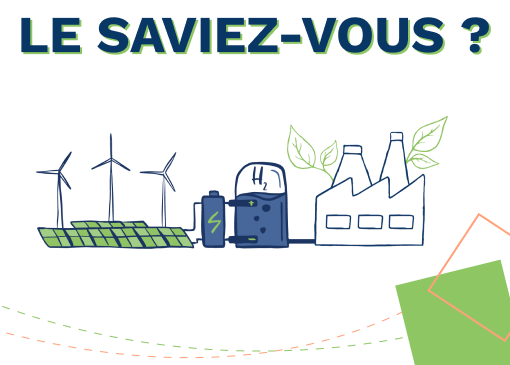
Green hydrogen is a clean, renewable energy source that is revolutionizing the industry. By usingrenewable energy to produce hydrogen from water, this technology offers an alternative to fossil fuels, reducing carbon emissions and helping to combat climate change. In this article, we’ll explore the different ways in which green hydrogen is produced, stored and used in industry, as well as its economic and environmental benefits. We will also discuss the current challenges and future opportunities for this emerging technology.
I. Background on the urgent need to reduce carbon emissions in industry
As in many sectors, there is an urgent need to reduce carbon emissions in industry.
Industry is one of the world’s biggest emitters of greenhouse gases, responsible for around a third of total CO2 emissions. Energy production, transport, agriculture, manufacturing, chemical processes and building materials are the main contributors to these emissions.
Climate change is a growing threat to the planet, manifesting itself in extreme weather events, melting glaciers, rising sea levels and disrupted ecosystems. To limit the impacts of climate change, it is urgent to reduce greenhouse gas emissions, and industry must play an active part in this transition.
Governments around the world have begun to take steps to limit industry’s carbon emissions, imposing stricter regulations on greenhouse gas emissions and encouraging the adoption of cleaner, more efficient technologies. However, these efforts will not be enough to meet global emission reduction targets.
This is why many companies are looking for alternative solutions to reduce their carbon emissions, notably by adopting renewable energy production technologies, improving theenergy efficiency of their processes and investing in innovative technologies such as green hydrogen.
Green hydrogen in industry is a promising solution for reducing the sector’s carbon emissions. By producing hydrogen from renewable energy sources such as solar, wind or hydro, green hydrogen can offer a clean, sustainable alternative to fossil fuels for power generation and industrial processes.
II. What is green hydrogen?
What exactly is green hydrogen? Production, manufacturing …
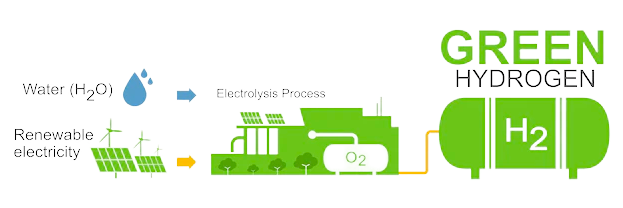
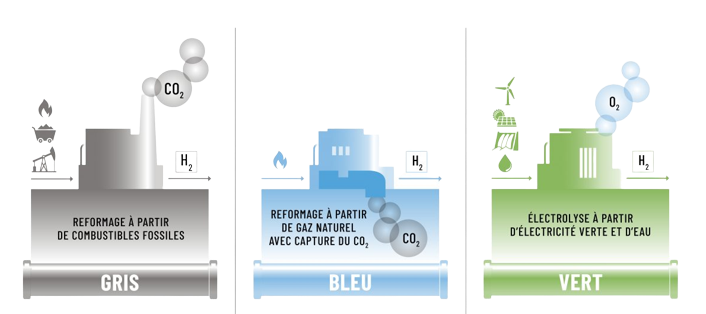
This type of hydrogen, of which there are several, is produced from renewable energy sources such as solar, wind or hydro power, which do not produce greenhouse gases. Unlike grey or blue hydrogen, which are produced from fossil fuels such as natural gas, green hydrogen has an extremely low environmental impact.
Two methods exist for producing green hydrogen: water electrolysis and biomass gasification.
Method 1: Water electrolysis
Water electrolysis is the process of separating the basic components of water, hydrogen and oxygen, using an electric current to “break down” the water molecules. The source of electricity for this action comes from solar or wind power.
Method 2: Biomass gasification
Biomass gasification is the process of converting organic matter (compost, animal dung, organic waste, etc.) into synthetic gas (or syngas): the basis for the subsequent production of hydrogen. In this process, organic matter is heated to high temperatures in the presence of a gasifying agent, such as steam or oxygen. The organic matter then decomposes into gas, which is then treated to separate the hydrogen.
For the moment, one drawback is the rather high cost of producing green hydrogen compared with other, less sustainable types of hydrogen.
However, this alternative remains an interesting option in the context of the environmental transition of industries.
III. Introducing green hydrogen as a promising solution
Hydrogen is the most abundant element in the universe, and can be produced from many green and less green energy sources.
It has a wide range of applications:
- power industrial processes,
- operate vehicles and equipment without greenhouse gas emissions,
- store or transport it for “on-demand” energy use at different sites, for example
- Power fuel cells for electric vehicles, buildings, data centers and other equipment, offering a clean, efficient alternative to traditional combustion systems.
IV. The benefits of green hydrogen in industry
Here are the main advantages of using green hydrogen in industry:
- Reducing greenhouse gas emissions: One of the main advantages of green hydrogen is that it significantly reduces greenhouse gas emissions in industry. As mentioned above, it is produced from renewable energy sources: its production therefore generates very low greenhouse gas emissions (we can’t say that they are zero, since the manufacture of renewable energy infrastructures itself emits greenhouse gases). It can be a relevant lever for reducing CO2 emissions and moving towards carbon neutrality.
- Versatility: Green hydrogen can be used in a wide variety of applications and industrial sectors, including heat and power generation, fertilizer production and chemical manufacturing.
- Energy storage: The ability to store energy is its main advantage: it enables timing, anticipation and reactivity when other energies are not available.
- Performance: When used to power fuel cells, its efficiency will be superior to that of internal combustion engines. Its use can therefore help industries improve their energy efficiency and reduce their consumption of fossil fuels.
- Reduced noise and odours: Using green hydrogen can also help reduce the noise and odours associated with industrial processes. Unlike fossil fuels, hydrogen produces neither noise nor smoke: considerable advantages in view of the working conditions sometimes observed in industry.
V. Green hydrogen applications in industry
In this section, we explore the various applications of green hydrogen in industry.
- Power generation: Green hydrogen can be used to generate electricity in power plants. Fuel cells can convert hydrogen into electricity, generating clean energy.
- Heating and cooling: two processes frequently used in industry. Hydrogen boilers can replace natural gas boilers for heating buildings. Absorption refrigerators can also be powered by hydrogen, reducing greenhouse gas emissions.
- Transport: Vehicles powered in this way can offer a clean, efficient alternative to fossil-fuel vehicles, trains and ships chartered to transport goods and raw materials.
- Chemical industry: Production of basic chemical products such as ammonia and methanol, to name but a few.
VI. Future prospects for green hydrogen in industry
In this final part of the article, we explore the future prospects for green hydrogen in industry.
Increased production: As demand for green hydrogen increases, production costs continue to fall. At the same time, more and more companies and governments are adopting carbon neutrality targets, encouraging initiatives to diversify energy sources.
Demand growth: Industries need sustainable solutions to meet their greenhouse gas emission reduction targets, and green hydrogen offers a promising solution. Demand should therefore continue to grow in the years ahead.
Development of new markets: Manufacturers are increasingly realizing the potential of green hydrogen, not only in terms of its environmental impact, but also in terms of financial gains in certain areas.
In conclusion, green hydrogen offers many promising prospects for industry. Its manufacturing process is constantly evolving: this solution should become increasingly competitive with fossil fuels. Its advantages in terms of greenhouse gas emissions reduction, versatility, energy storage, performance and noise and odor reduction make this energy source a key solution for achieving carbon neutrality objectives.