

Today’s industries are faced with a complex challenge: how to boost their activity and optimize their competitiveness while taking environmental imperatives into account?
Industrial processes are energy-intensive, since they consume a great deal of steam, compressed gas and refrigeration. The question of industrial energy performance is therefore crucial if the sector is to make a success of its energy transition.
Today, energy performance is a prerequisite. It’s high time to go further and talk about environmental performance.
This is the subject of our new White Paper entitled :
“From energy performance to environmental performance
We give you all the steps and tools you need to succeed in your environmental performance.
This White Paper was written by Dametis experts

Julian Aristizabal
Co-founder, CEO

Grégory Pain
International Business developerCofounder, CEO

Guillaume Lecore
Service Manager
and other experts in environmental efficiency:

Mathias Welschbillig
Environmental expert

Olivier Barrault
President of ATEE Grand Ouest & CEO Elodys InternationalExpert on the environment
Chapter 1: Energy management
I. What is energy management?
Energy management”: an essential implementation tool
Energy is invisible, omnipresent and indispensable to a company. Electricity, gas, fuel oil and coal are primary energy carriers; compressed air, steam, hot water, cold water, chilled water and all coolants are secondary carriers.
In a plant, energy, thanks to these primary and/or secondary vectors, enables transformations from one vector to another and transformations linked to processes.
EnergyManagement is therefore quite simply the ability to manage this energy.
For example, Toshiba chose Dametis to improve energy consumption at its Dieppe site.
Energy efficiency: a goal and an asset for the climate and for consumers

Energy accounts for between 1 and 5% of company costs. The impact is secondary. Yet it’s a crucial issue. “As Julian Aristizabal, CEO and founder of start-up Dametis, points out: “Energy has become a priority for consumers, along with environmental issues.
The Agence de la Transition Energétique points out that energy performance is “a key element in the performance of tomorrow’s industry”.
Despite an 11% drop in energy consumption in the industrial sector between 1990 and 2014, a 40% drop in greenhouse gas emissions and a 50% drop in intensity, “the industrial sector can still improve its energy efficiency by an average of 20% by 2035″.
Of course, solutions do exist to offset energy consumption. On the one hand, there are
Energy management”: an essential implementation tool
To solve this problem, Dametis has proved its worth by aiming for what the start-up’s experts have called “the achievable energy minimum”. Each plant is divided into a multitude of blocks.
These are compared individually with similar, optimized blocks. This shows where progress can be made. Dametis customers have achieved average energy savings of between 5% and 20%. Ouest France, in a March 2021 article entitled “Dametis reconciles industry and ecology”, cites a company that has reduced its carbon dioxide emissions by 62%.
Optimizing energy use is an essential step for any company. However, Dametis offers more advanced possibilities with environmental management.
II. Going beyond energy performance in industry, Dametis offers environmental performance management
The limits of energy management
Faced with today’s environmental challenges and the pressure on companies, it’s not enough to simply optimize energy use at industrial sites. Management must also be environmental.
In 2020, gross energy consumption in industry fell by 9%, according to Insee. Despite this reduction, there is still room for improvement, as it stands at 32.2 million tonnes of oil equivalent. What’s more, this reduction should be seen in the context of Covid-19. The Insee report points out that “40% of industrial plants report that consumption of at least one energy source has fallen as a result of the health crisis”.
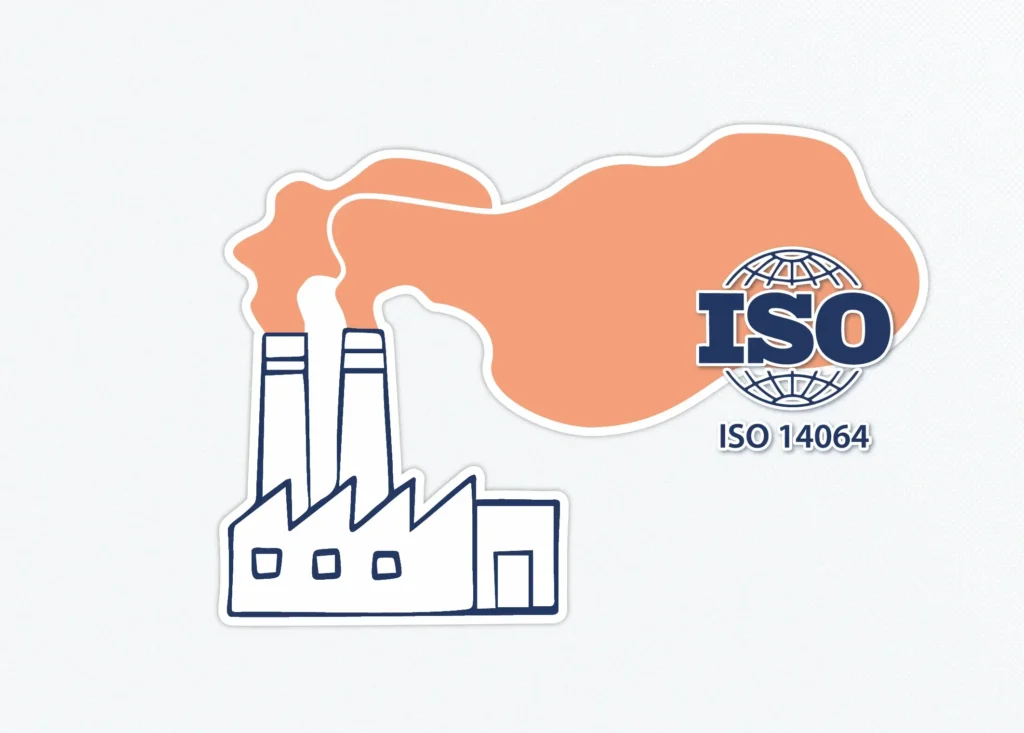
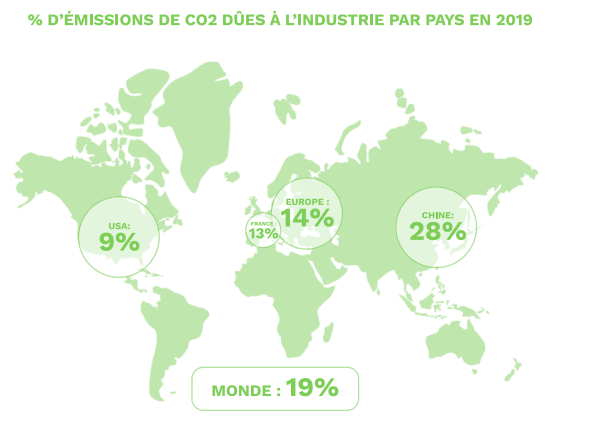
The role of companies is not negligible. In 2019, industry was responsible for 19% of CO2 emissions worldwide and 13% in France. The same year was described by L’Express as “the year of climate awareness”. Indeed, climate change has become a major issue for 94% of French people, and is a priority issue for 47% of them, according to a survey carried out by Ipsos, for Le Parisien, in 2022.
Imagining the factory of tomorrow
“But what stages should you take your company through? How can you keep up with the flow of information? “Olivier Barrault, President of the Association Technique Énergie Environnement (ATEE) in the Grand Ouest region. “In this situation, Dametis has a crucial role to play: to support the development and implementation of this zero-carbon strategy. Especially as this start-up has the advantage of independence. It can provide neutral expertise, tailored to the needs of each individual.”
The energy mix is one of the answers. Customized for each company, it is a way of reducing carbon consumption while avoiding the additional cost of green energies.
Thinking about tomorrow’s factory means thinking differently about the Process, as Olivier Barrault points out in his presentation of ATEE’s decarbonization strategy.
The energy mix or environmentally-friendly energy consumption
The energy mix is “the distribution of the different energy sources used for the energy consumption of a territory”, according to a definition by Planètes énergies. It is also referred to as the “energy mix”.
“Today, France’s energy mix is still over 60% dependent on fossil fuels. To meet its climate targets, France must decarbonize its mix and replace fossil sources with electricity,” notes the Ministry of Ecological Transition.
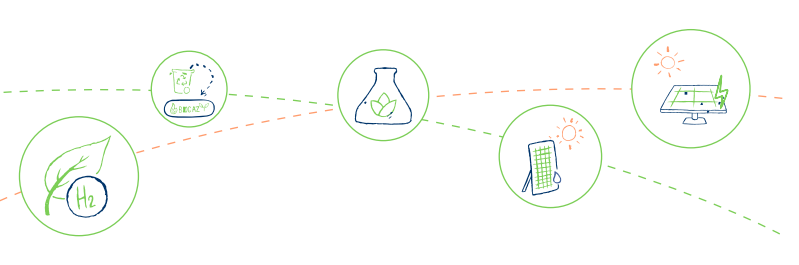
There are several types of renewable energy:
- Solar thermal energy produces heat from solar radiation. This energy is “still little known in the industrial sector”, points out the French Ecological Transition Agency. “However, it is a renewable heat solution that can be integrated into a wide range of heat-consuming processes […]. […] Around 30% of industrial heat requirements involve temperatures below 140°C, and can therefore be met by solar thermal energy.”
- Photovoltaics is the conversion of solar energy into electrical energy. This energy has been booming in France since 2009, reaching a production of 13.6 TWh in 2014. This growth is set to continue, thanks to the competitiveness of this renewable energy.
- Biomass is energy produced from the heat released by the combustion of organic matter, such as wood, plants and agricultural or organic waste. Biomass is “the main source of renewable energy in France”, points out the Ministry of Ecological Transition. “It accounts for more than 55% of final energy production and therefore makes a significant contribution to reducing our consumption of fossil fuels.
- Methanization is a process that produces biogas and digestate from organic matter, either food waste or industrial waste. The former can become biomethane, while the latter can be used as fertilizer. Producing biomethane offers numerous advantages for the environment and local communities. The waste used is local, and so is the energy produced. Methanization thus contributes to waste management,” stresses GRDF. This process is also used in “the treatment of bio-waste, urban sewage sludge and certain industrial effluents”, notes the French Ecological Transition Agency.
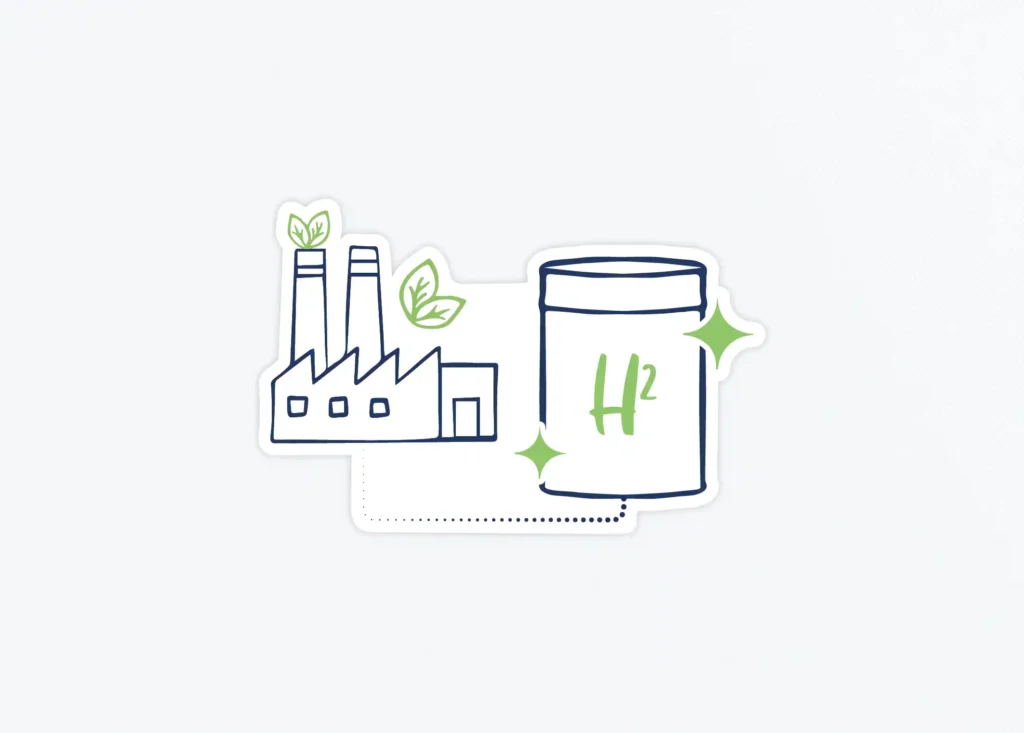
- Green hydrogen:Green hydrogen is hydrogen produced from a renewable energy source. For Engie, this is “one of the levers of the future to accelerate the transition to carbon neutrality”. In October 2021, Les Echos newspaper wrote that “green hydrogen is set to become the leading alternative energy source”.
The limits of energy management
Knowing about green energies is one thing. It’s quite another to know which ones to use, how to use them, in which mix, and to what extent they fit in with the industry’s energy performance objectives.
To achieve this, Dametis takes several steps during its intervention:
- Understand how the plant operates. Dametis retrieves plant data and defines an ideal plant with the minimum environmental impact achievable. “This includes a target of maintaining performance levels over time and reducing consumption,” emphasizes Julian Aristizabal. “At the same time, we are electrifying processes, as it is easier to decarbonize electricity than gas.”
- Presentation of action plan to industry. “It’s the latter who chooses where to place the cursor of our intervention,” explains Dametis’ CEO.
- The energy mix. ” It’s easier to decarbonize optimized consumption,” says Julian Aristizabal. This mix therefore comes after the step aimed at achieving the environmental minimum, and is proposed according to the site. For example, “it’s easier for us to propose a mix that includes methanization for a food company, because it has organic waste. If a company is located in an area with a large wood resource, we’ll propose a wood-fired biomass boiler,” he explains.
Every plant is unique. The precise solution, developed by Dametis experts, is specific to each industrial site.
Would you like to read the rest of the White Paper to find out all the steps to follow and the tools you need to succeed in your environmental performance?