



Reduce your industry’s energy consumption
Do you want your industrial sites to consume
less energy? Dametis can help you increase
their energy efficiency and reduce their
carbon footprint with the SEEE method.
Why reduce your industry’s energy consumption?
Energy consumption is the nerve center of all human and industrial activity. This is all the more true these days, with geopolitical tensions driving up prices. And that’s not to mention the environmental challenges we face.
In this delicate context, Dametis helps manufacturers regain control of their energy consumption. The key word: aim for the Minimum Energy Target. We explain it all on this page.
The SEEE concept for
using less energy
To meet the challenge of consuming less energy, Dametis has developed the SEEE method: a low-carbon energy factory concept.
Here are the 4 steps to a complete transformation.

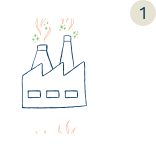
Sobriety

Efficiency
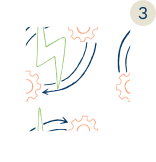
Electrification

Renewable energies
1. Energy efficiency
The first step towards energy sobriety is to monitor your consumption closely. From there, it’s possible to detect any deviations, raise awareness of good practices and implement the necessary corrective actions.
For a plant, energy efficiency means maintaining a constant level of performance over time. In fact, a plant’s performance level naturally tends to decline over time.
MyDametis helps you achieve optimum energy efficiency

2. Energy efficiency
To improveenergy efficiency, we have defined a Minimum Energy Attainable (MEA) for each section of the plant. The MEA is a standard energy efficiency score towards which you can strive.
To achieve this, we virtualize your plant, breaking it down into blocks that correspond to its various sections and fit together like Lego. Each block is modeled and assigned an MEA.
Of course, no two plants will ever have the same block assembly, but similar blocks can be found in most plants. And that’s the beauty of this method: it standardizes energy efficiency scoring.
This enables us to identify precisely which areas of your production line are the least energy-efficient. We then work to improve them in order to achieve your ideal plant.

3. Process electrification
Process electrification is a good way to reduce your carbon footprint, but it also improves the competitiveness of your industrial sites by reducing their energy consumption.
In fact, electrical energy offers higher efficiency than fossil fuels such as gas.
In addition, electrical infrastructures are lighter and easier to maintain.
Finally, electrification is interesting in an environment where energy production is already decarbonized, which is the case in France.

4. Developing renewable energies
Using renewable energies (RE) is a good way of reducing the carbon footprint of your industrial sites. They fall into two categories: renewable electricity and green heat.
✔ Renewable electricity: photovoltaic, hydraulic, wind, green hydrogen.
✔ Green heat: heat recovery, biomass, high-temperature heat pump on a low-temperature water loop.
✔ Biogas: methanization, pyrogasification.
Storage, data and software will enable the emergence of decentralized, bottom-up energymanagement, unlike our current centralized system.

Reduce your energy bill,
shall we get started?
Using less energy starts with the first brick. Book a call with a business expert to discuss your industrial sites’ energy efficiency issues.
Testimonials
they chose DAMETIS
Contact us
to reduce your consumption
Error: Contact form not found.