


How to calculate and reduce your company’s carbon footprint?
CO2 is one of the main components of air pollution. As part of an ecological approach, calculating your company’s carbon footprint will enable you to assess your production of this gas. This will enable you to find out where you stand, raise awareness and discover ways of reducing your carbon footprint.
Definition of carbon footprint
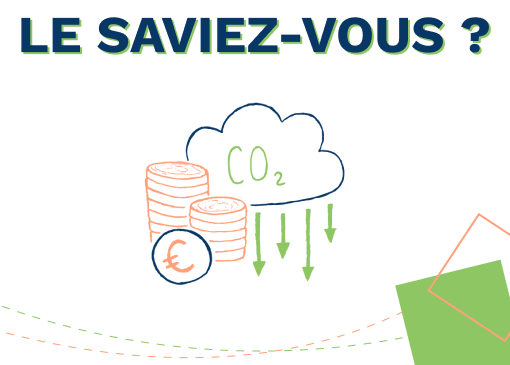
The carbon footprint is the sum total of all greenhouse gas emissions that can be attributed to a company, an entity or an individual. It therefore includes both the emissions generated directly by your activity, such as fuel and plastic consumption, and indirect consumption. For example, gas emissions caused by the production and transportation of the raw materials you use are part of your carbon footprint.
To enable you to measure your carbon footprint exhaustively, ADEME has defined a method known as the carbon footprint.
The carbon footprint calculator for your company
The carbon footprint is used in France to account for all the greenhouse gas emissions of a company or an individual. We’ll look at the specifics of the carbon footprint, and how you can set it up internally to calculate your carbon footprint.
What is a carbon footprint?
The carbon footprint is a method developed by ADEME, which defines it as “an evaluation of the quantity of greenhouse gases emitted (or captured) into the atmosphere over one year by the activities of an organization or territory”.
The official name for carbon footprints is “ges footprints”, for greenhouse gases. Although carbon is one of the most common greenhouse gases, this assessment allows you to evaluate all your emissions, even those less represented.
This method establishes a single way for all companies to assess their carbon footprint. It allows :
- Compare objectively with the market
- An exhaustive review to identify areas for improvement
- Benefit from a single criterion for assessing your compliance with legal standards
Calculating carbon footprints to compare objectively with the market
The French government regularly publishes key figures for different industries, based on production levels. The unique carbon footprint calculation enables you to see where your company stands in terms of greenhouse gas production. If you have improvements to make in relation to your competitors, Dametis will be able to support you in these actions.
An exhaustive review of your carbon footprint
The carbon footprint also ensures that you don’t forget any source of carbon production, which would give you the impression of producing very little. On the contrary, you may discover that the choice of your supplier or the storage of your products are potential areas for optimization.
A single criterion for the legal assessment of carbon footprints
Finally, it ensures fair treatment in the eyes of the law, in particular to ensure a single evaluation criterion for the carbon tax and for other laws relating to greenhouse gases. This is why all companies with over 500 employees are required to carry out an annual carbon audit.
How to calculate your carbon footprint?
Your company’s carbon footprint can be assessed in-house. In fact, you can find all the resources you need on the Ademe website. Whether you’re a company, a local authority or a public institution, their site contains the resources you need. Of course, you’ll need to spend a lot of time on this, whether reading the documentation or obtaining the necessary elements from your colleagues and suppliers.
That’s where Dametis comes in. Thanks to our software, you’ll gain time and precision on your carbon footprint. Our technicians can also put their expertise to good use in drawing up your company’s GHG balance sheet, giving you peace of mind with the certainty of an accurate carbon footprint.
Identify ways to reduce your company’s carbon footprint
Identify reduction opportunities, anticipate the future
Once you’ve calculated your carbon footprint, how do you use it? The first thing to do is to assess which of your poles produce the most greenhouse gases, and check whether :
- It’s more than you expected
- Does the carbon footprint allocation make sense to you?
- You can win on some of them
Indeed, in a production plant, you may find that your main source of GHGs will be the use of the plant’s machinery. In some cases, a more efficient maintenance solution, or, in other cases, the modernization of your installation will enable you to improve your energy efficiency. Energy efficiency can mean maintaining production while reducing consumption, or increasing production for the same amount of energy. The French government offers a number of grants to help companies carry out environmentally-friendly work.
If the production of a pole surprises you, it will be necessary to understand the reason for its place in your GHG balance, and, if necessary, to find alternatives.
For example, if the storage facility from which you pick up raw materials ten times a day is 15 km from your company, your carbon footprint will suffer. It may be more profitable to invest in a facility close to your production site for all or part of your raw materials.
Dametis experts can support you in both simple and complex optimization projects.
Implement carbon offsetting measures
Finally, there are carbon offsetting measures, which will remove carbon from nature, or enable others to produce less. This carbon is subtracted when calculating your carbon footprint.
These measures include reforestation, the installation of solar panels for external use, and support for other environmental projects.