



Industry 4.0: Dametis Supports You in Its Implementation
The arrival of new technologies has disrupted our world. Digital is everywhere, all the time, and the industrial sector is no exception. A closer look at the factory of our generation, the connected factory, also called Industry 4.0.
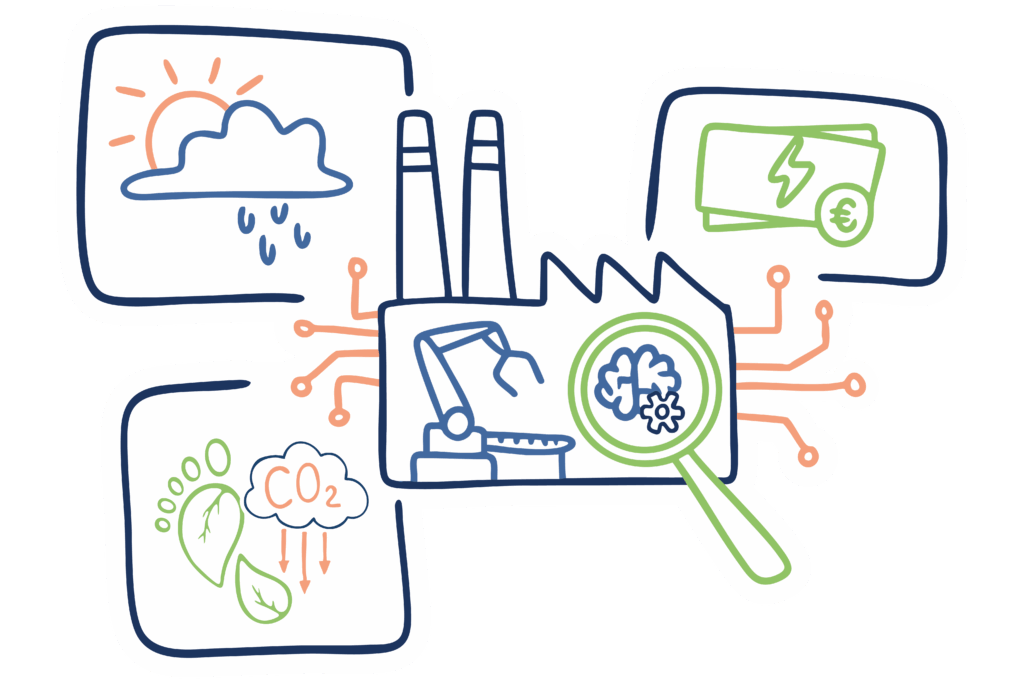
The Evolution of Factories Over Time, the Birth of Industry 4.0
The concept of Industry 4.0 was officially presented in Germany in 2011. The term “4.0” is used to describe the fourth industrial revolution, born from the evolution of the previous 3:
- First Industrial Revolution (late 1700s). This period marks a turning point in industry with the birth of mechanization, driven by the creation of the steam engine.
- Second Industrial Revolution (late 1800s). Energy sources evolved, with electricity and oil becoming the most widely used. This was also the era of Fordism, assembly line work spread, mass production at low cost and faster speeds.
- The Third Industrial Revolution (late 1900s). Computing gradually arrived, machines followed fixed programs, enabling automation of production lines. Human labor became less necessary for repetitive and complex tasks.
With the fourth industrial revolution, equipment behavior evolved. Machines are no longer given a fixed program; they are connected to each other, to the outside world, and to factory data to optimize production.
Industry 4.0 transforms the factory into an intelligent ecosystem where IoT (Internet of Things) and sensors collect massive data, centralized on a server (locally or in the Cloud). Ultimately, this allows software such as MES, PLM, CMMS, or EMS software to process this data. Thus, these software solutions become decision-making tools capable of providing dynamic instructions to optimize factory operations.
Transforming the Factory to Move Toward Industry 4.0?
The concept of Industry 4.0 enables factories to leverage collected data with the goal of increasing their industrial performance while improving the sustainability of their operations.
With this new type of industry, data from equipment and sensors is monitored and analyzed in real time, ensuring informed decision-making and instant, continuous optimization of industrial performance.
What does the transition to Industry 4.0 actually mean for industries?
Team Autonomy Increases
Thanks to automated data analysis and action recommendations aimed at optimizing factory performance—both in terms of productivity and energy efficiency and environmental impact—teams can make decisions more easily and quickly.
Production Increases
Thanks to Industry 4.0, facilities are optimized to work together, according to precise and optimized recipes and production schedules. Production lines are stopped for shorter periods, which increases productivity.
Costs Are Reduced
Although facilities run more, they are adjusted together, optimally, to limit both energy overconsumption and equipment wear. These adjustments improve and refine the use of resources and raw materials.
Beyond these optimizations, software tools enable rapid detection of deviations, identification of their causes, and recommendation of appropriate corrective actions. All of these actions have a direct impact on costs, which then decrease drastically.
The Factory’s Environmental Impact Decreases
A smart factory is one that combines high productivity and efficiency. The more optimized the processes, the lower the GHG emissions and environmental discharges.
Industry 4.0 to Successfully Implement Your Energy Efficiency Approach
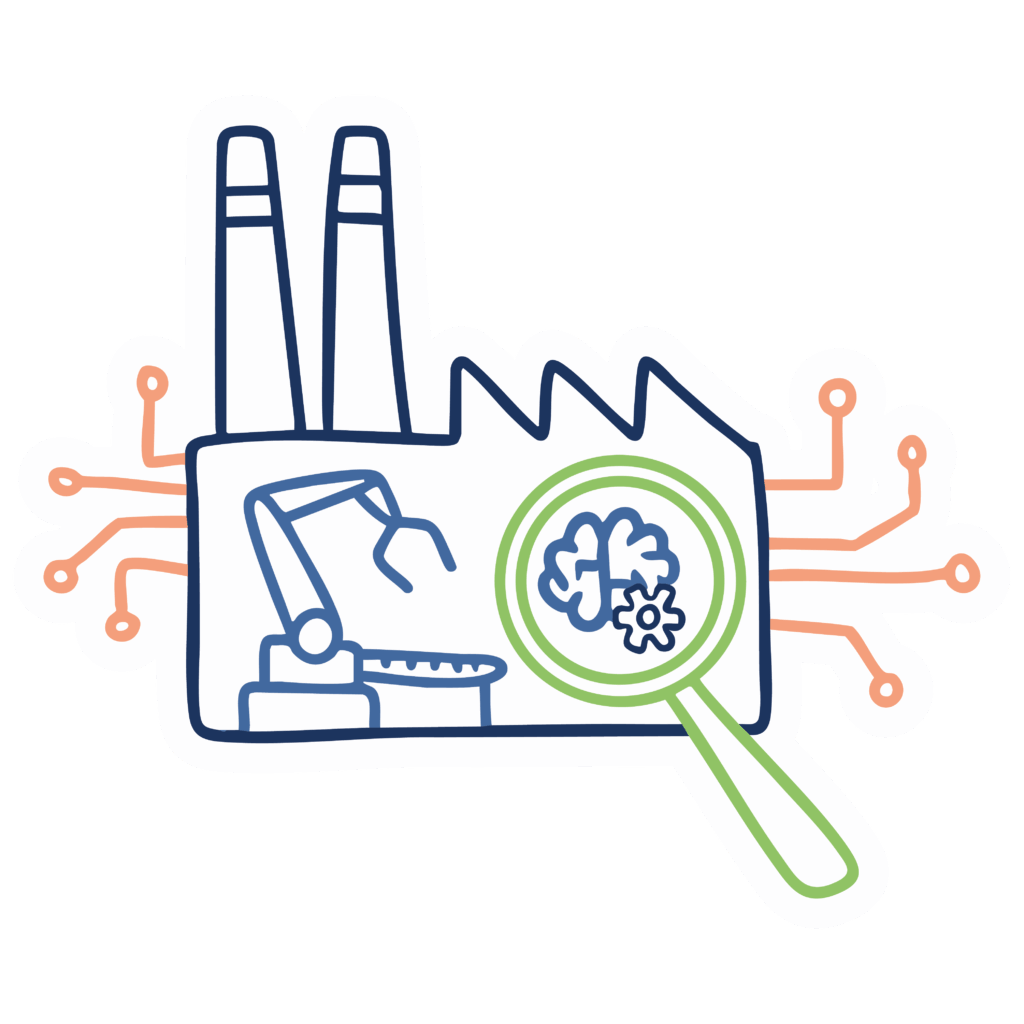
Industry 4.0 is a vast ecosystem, but for many manufacturers, the most important and profitable element remains operational performance. But how can this revolution be used to create an ideal factory, one that combines high productivity with high energy and environmental performance?
To ensure both elements are increased, it is essential to know and control your consumption.
To do this, it is recommended to first conduct an industrial energy audit. This will collect energy consumption data, establish an initial assessment, and develop an action plan to reduce consumption.
However, in industry, data is present in very large quantities. To exploit it effectively, it is imperative to rely on technological building blocks capable of standardizing, contextualizing, and consolidating data in order to properly exploit it:
- Standardize the data to make it reliable and comparable
- Contextualize the data, by linking it to equipment and operational context, to give it meaning and make it analyzable
- Consolidate the data, to manage effectively by adapting to the maturity level of the site and headquarters.
A true foundation of Industry 4.0, EMS software enables all these technological building blocks to interact and centralizes them to provide an actionable view of processed data. It thus offers a clear vision of the modeled factory and data translated into reports, diagrams, dashboards, etc.
Powerful through the technological building blocks that compose it, this software goes even further and provides several concrete benefits to manufacturers who choose to implement it:
- Real-time consumption monitoring and data contextualization
- Consumption comparison by recipe, by equipment, etc.
- Visualization of proper facility operation, deviation detection, and AI-powered optimizations
- Recommendation of optimization projects and action plan monitoring
- Support in all chapters of the ISO 50001 standard
- Multi-site vision for comparison between sites and transmission of best practices
- Facilitates the continuous improvement approach to industrial performance
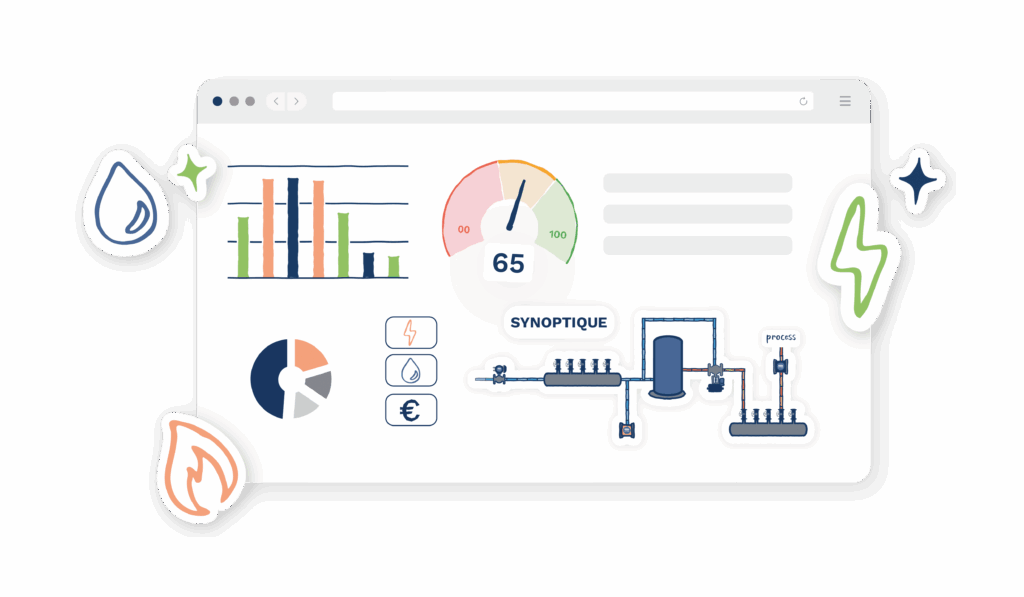
Thanks to this tool, the system becomes connected, intelligent, and sustainable over time.
Data collected in the field is made reliable, analyzed, making operators within the factory autonomous, more efficient, and more easily able to make decisions. Beyond facilitating the work of operators, this tool is also a true ally for other people involved in energy matters: management, IT, or finance.
This is the whole point of Industry 4.0: transforming raw data into informed decisions to implement a continuous improvement approach to industrial performance.
Contact us
to make your factory an Industry 4.0 factory!
Error: Contact form not found.