



Enacted in 2025, the DDADUE Act is designed to accelerate companies’ energy transition. Regulatory framework, consumption thresholds, implementation timeline: we break down everything you need to know about the DDADUE Act.
What is the DDADUE Act?
In the face of the climate emergency, actions to achieve the European target must be stepped up.
Enacted on April 30, 2025, the DDADUE Act, which notably transposes the European directive on energy efficiency, is intended to help achieve the carbon neutrality target more effectively.
This is precisely why this Act introduces strengthened obligations for companies in terms of energy management.
Reminder of the European target
- Reduce net greenhouse gas emissions by 55% by 2030 compared with 1990
- Achieve carbon neutrality by 2050
What really changes with the DDADUE Act
Previously, energy management obligations applied to companies based on headcount or turnover criteria. Today, with the DDADUE Act, these criteria are replaced by an impact criterion—namely the company’s annual energy consumption.
DDADUE Act: am I affected?
From now on, from an average annual final energy consumption greater than or equal to 2.75 GWh/year, companies—including industrial sites—are subject to obligations.

The key information not to miss!
To find out whether you are affected, note that this obligation, based on annual consumption, must be calculated at SIREN level, based on the average over the last 3 calendar years.
To maintain this impact-based logic, the DDADUE Act sets two obligation thresholds.
Your annual energy consumption is between 2.75 and 23.6 GWh: what does the DDADUE Act require?
For guidance, depending on the energy mix selected and fluctuations in energy prices, 2.7 GWh of consumption represents an annual bill of around €200,000. Consumption of 23.6 GWh represents, on average, an annual bill of €1.5 million.
Obligation:
Carry out a statutory regulatory energy audit covering at least 80% of final energy consumption by October 11, 2026. It must then be renewed every 4 years.
Exemptions:
- Having an environmental management system certified, for example ISO 140001, and incorporating an in-company energy audit.
- Implement an energy performance contract (EPC) covering at least 80% of final energy consumption.
- Having implemented or implementing an ISO 50001-certified energy management system, for example.
Penalties:
In the event of non-compliance with the obligation set by the DDADUE Act, manufacturers face a fine of 2% of their turnover excluding tax (in the event of a repeat offence, this may increase to 4%).
Your annual energy consumption exceeds 23.6 GWh: what the DDADUE Act requires
Obligation:
Implement an Energy Management System (EnMS) compliant with the ISO 50001 standard, no later than October 11, 2027.
Exemptions (identical to those relating to the audit obligation) :
- Having an environmental management system certified, for example ISO 140001, and incorporating an energy audit in the company.
- Implement an energy performance contract (EPC) covering at least 80% of final energy consumption.
Penalties:
In the event of non-compliance with the obligation set by the DDADUE Act, manufacturers face a fine of 2% of their turnover excluding tax (in the event of a repeat offence, this may increase to 4%).
Beyond meeting the obligation, having an ISO 50001-compliant system and getting certified provides official recognition, while also offering several benefits:
- Optimised energy consumption
- Lower energy bills
- Decarbonisation of the site
- Enhanced brand image
- Stronger team engagement on energy topics
The DDADUE Act requires you to carry out an industrial energy audit or to implement an ISO 50001 EnMS ? Dametis supports you!
How can you make it easier to implement an ISO 50001 EnMS to comply with the DDADUE Act?
The first step is, above all, to appoint a representative with the skills required to ensure the EnMS operates effectively (often referred to as an “Energy Lead” or “Energy manager” within the entity).
However, even with an Energy Manager appointed, implementing an ISO 50001 EnMS can quickly become a time-consuming, error-prone step if everything is centralised in an Excel file.
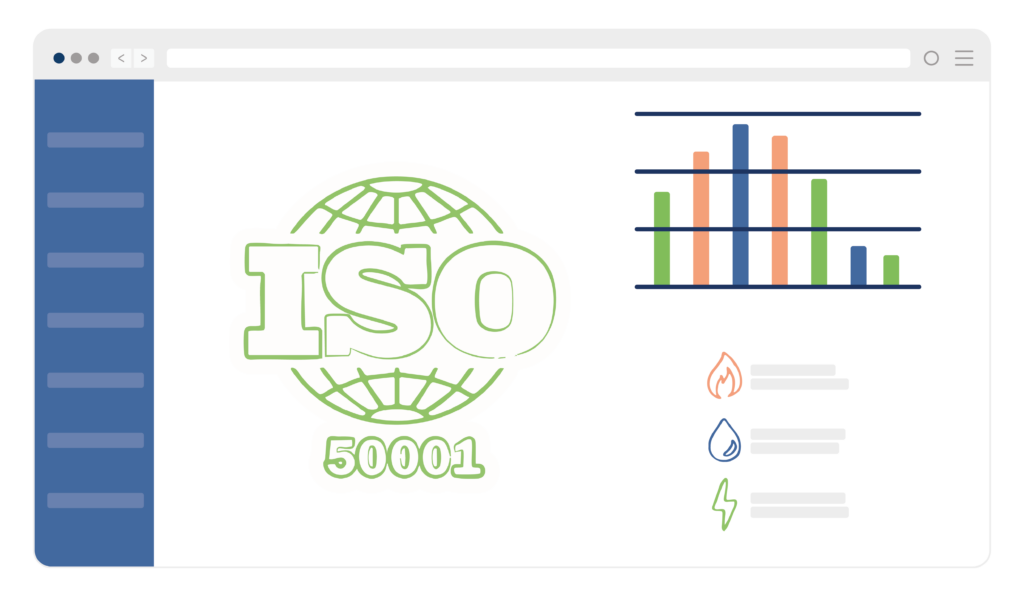
To make it easier to obtain and maintain this certification over time, automating data collection is key. An EMS software solution, connected to your equipment, makes it possible to collect, verify and model data in real time. A considerable time-saver for teams, who can then focus on project monitoring!
To go further and support manufacturers even more in the process, we developed an ISO 50001 module, available on MyDametis. In short, the review is 100% digitised and SEUs (Significant Energy Uses) are defined automatically thanks to the built-in scoring matrix.
Finally, beyond tools, support and upskilling teams can significantly simplify bringing your site into compliance and addressing your energy challenges.
Whether you need to carry out an energy audit or implement an ISO 50001 EnMS, our experts are here to support you!
Contact Dametis to comply with the DDADUE Act
Error: Contact form not found.