


Industry 5.0: definition. What transformations are taking place in our factories?
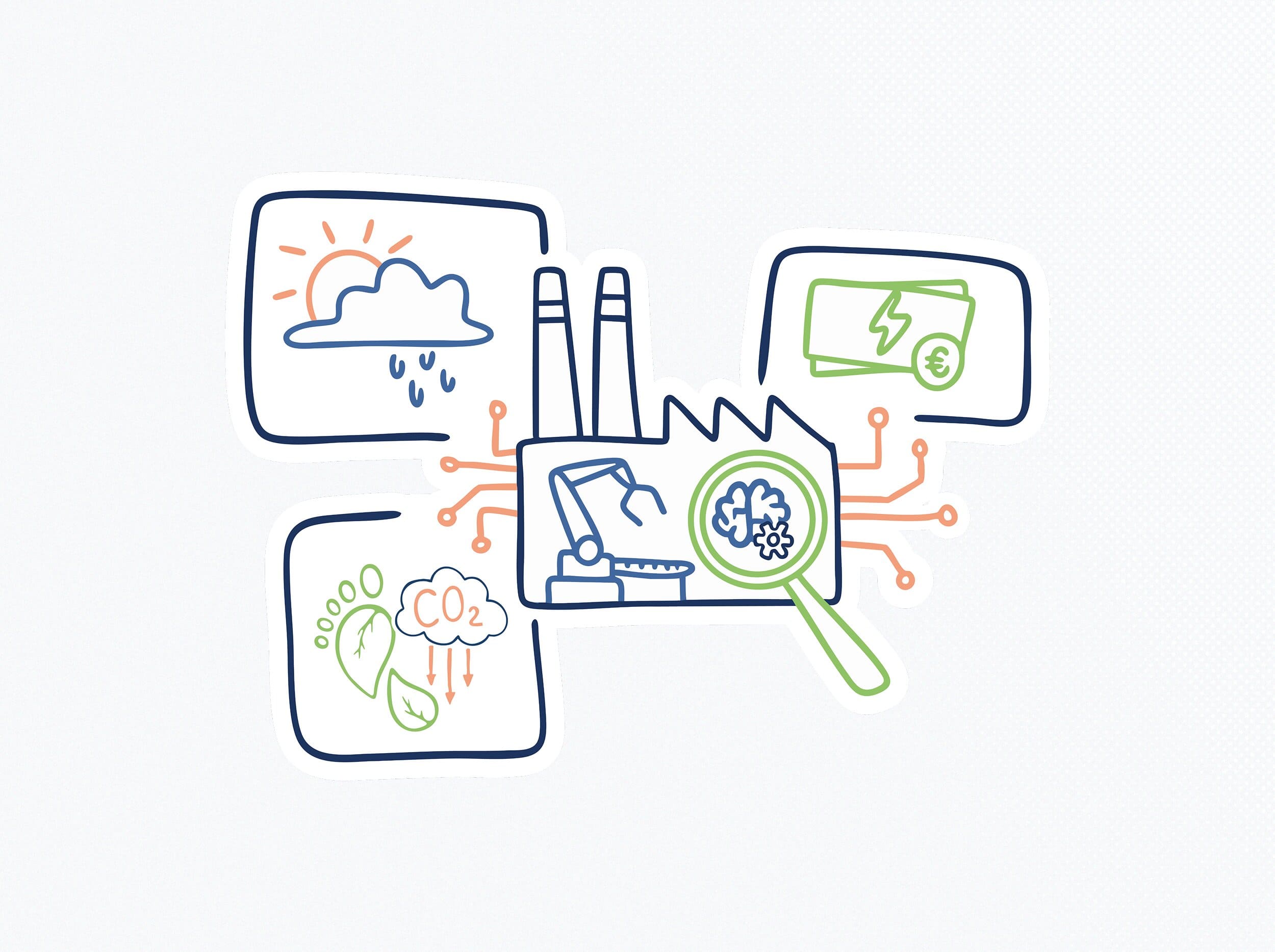
Industry 5.0 is a concept at the intersection of new technologies and a broader reflection on the interactions between industry, society and the environment.
Formulated by the European Commission in the early 2020s, it promotes a new way of producing—more sustainable, more resilient and more human-centric. To achieve this, Industry 5.0 relies on technologies, some of which emerged as part of Industry 4.0. So what is Industry 5.0? What benefits and what challenges does it represent for manufacturers?
Definition of Industry 5.0: emergence and paradigm
Industry 4.0 as a starting point
Industrial history has been shaped by successive developments, from the advent of steam power to, more recently, the robotisation of workshops, the digitalisation of production line management and the rise of artificial intelligence. With the arrival of this type of technology, it is now possible to automate recurring tasks as well as complex data analysis to continuously optimise processes and increase industrial performance.
In the 2010s, the first Industry 4.0 technologies appeared. This concept is based, among other things, on the digitalisation and connection of industrial equipment, data collection, and the arrival of IoT and the Cloud. In practical terms, the arrival of these technologies marks the advent of a connected factory, where consumption, equipment and processes are monitored in real time. Access to data facilitates decision-making and makes it possible to drive an increase in equipment performance.
The ultra-connectivity of factories, artificial intelligence and societal and environmental challenges form the foundation of Industry 5.0: the latter uses these technological advances to transform industry sustainably. It emerged in an unprecedented crisis context caused by the Covid-19 pandemic.
The 3 pillars of Industry 5.0, or the emergence of a new industrial paradigm
In 2021, the European Commission published the report “Industry 5.0: Towards a sustainable, human-centric and resilient European industry”, in which it states that industry must transform following the health crisis the world has just been through.
It then introduced the concept of Industry 5.0. This new form of industry uses Industry 4.0 technologies to move towards a more sustainable and resilient model, capable of facing future crises. It also aims to reconcile industrial performance with the social and environmental objectives of the European Green Deal.
According to the European Commission, Industry 5.0 has three key pillars:
- Human expertise, brought back to the heart of processes and supported by technological development.
- The adoption of eco-responsible practices, promoting the circular economy, resource optimisation, and the reduction of waste and
carbon emissions. - The emergence of a resilient production system, with value chains designed to withstand potential economic, health or geopolitical crises.
The objective is therefore to develop an industrial strategy that reconciles competitiveness and decarbonisation. To achieve this, it encourages the adoption of new performance indicators that are no longer limited to economic criteria alone, but also take social and environmental dimensions into account. To begin this transformation, several technologies are available to manufacturers.
Industry 5.0 in practice: technologies, benefits and challenges
Technologies serving industrial transformation
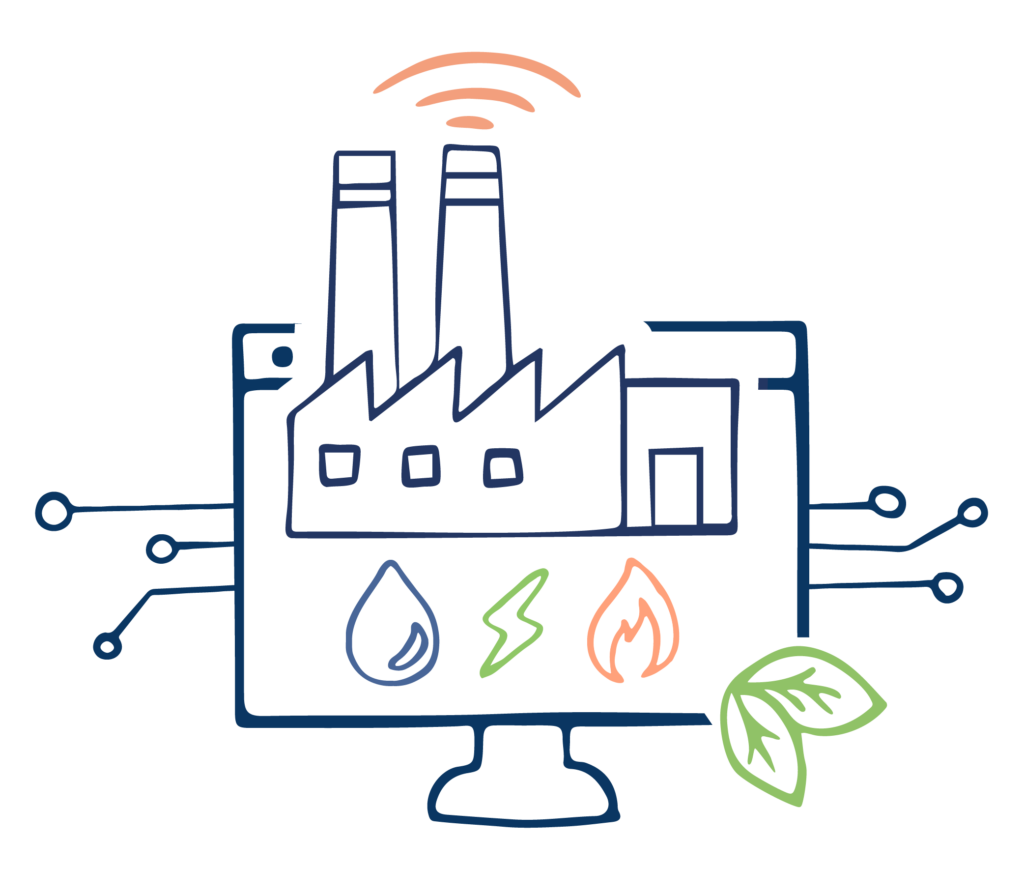
Industry 5.0 relies on a set of technologies that build on advances from Industry 4.0.
Among them, artificial intelligence is playing an increasingly important role. By leveraging information from equipment and production lines, it makes it possible to automate certain decisions, detect anomalies, optimise production flows and reduce energy consumption.
Software is also at the heart of this transformation. Digital twins, EMS software (Energy Management Software) or EMOS software (Energy Management and Optimisation Software) are major technologies.
Digital twins provide a virtual representation of equipment, a production line or a factory to simulate different scenarios.
Beyond this simulation capability, EMS solutions provide real-time visibility and alert manufacturers in the event of drift. They can then implement more relevant improvement actions.
The integration of these technologies into factories offers numerous benefits for manufacturers, but also presents challenges in facilitating their successful implementation. With the emergence of Industry 5.0, new technologies are also created to provide the best possible support for teams in increasing factory performance.
Indeed, software provides users with data and algorithms transcribed into digital models or reports, facilitating decision-making and reflection on possible improvements. Ultimately, this allows for the standardisation of practices between teams and across different sites.
In addition, interfaces and KPIs are customisable according to the user’s role, thereby making them even more expert and autonomous.
Benefits and challenges for the industrial sector
The first benefit lies in more resilient and more flexible production. Thanks to real-time control of facilities, manufacturers can better anticipate disruptions and move towards customised production to meet customer demands with greater responsiveness.
Industry 5.0 also helps improve the environmental performance of production units. Monitoring tools precisely measure energy and water consumption, as well as CO₂ emissions. This data becomes invaluable as carbon accounting is introduced and energy prices fluctuate.
Industry 5.0 technologies also contribute to improving operational performance.
According to a McKinsey study, Industry 5.0 could reduce downtime by 30% to 50% and cut product quality-related costs by 10% to 20%.
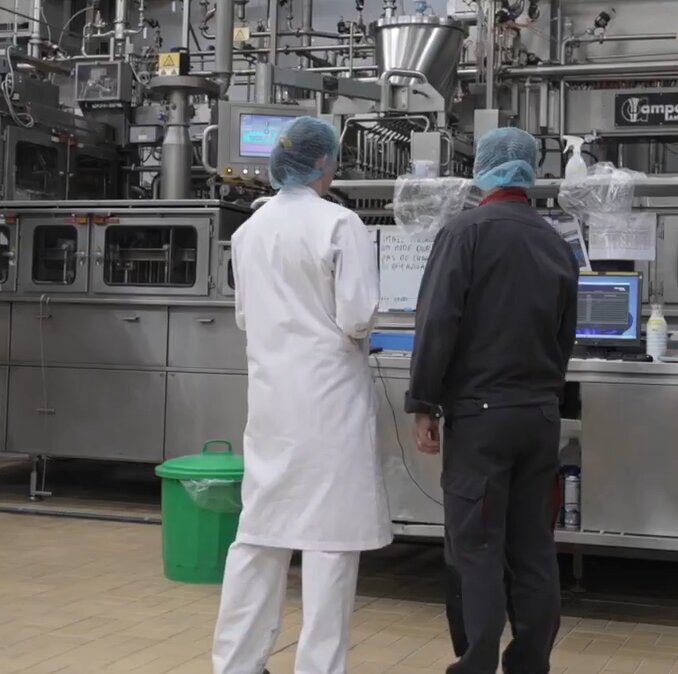
Finally, Industry 5.0 promotes better collaboration between people and technology by assigning repetitive or dangerous tasks to automated systems. It therefore enhances operators’ skills in analysis, control and continuous improvement activities.
However, these developments raise several challenges. The first concerns supporting teams and training them to use these new technologies. Next, their deployment costs can represent a significant challenge. They must be assessed against the expected gains in productivity, quality and reduced energy consumption. Finally, like all connected industrial systems, Industry 5.0 technologies are exposed to cybersecurity risks.
In conclusion, Industry 5.0 represents a major development in industrial history. It puts new technologies at the service of a more sustainable industry, with many benefits for the sector.
Do you want to improve your factory’s performance?
Contact us!
Error: Contact form not found.